India’s higher education system produces millions of graduates every year. But the faculty that guides them has long worked without a structured, continuous framework for professional development. College and university teachers come to the classroom with a solid intellectual background, but little systematic preparation for pedagogy, leadership, or the changing realities of contemporary institutional life. That gap has real consequences for a country that aspires to be a knowledge economy.
Now the University Grants Commission has taken its turn to close it. Union Education Minister Dharmendra Pradhan on Friday formally launched the Malaviya Mission Teacher Training Programme, a large-scale skill development programme for around 15 lakh higher education teachers across the country. The launch occurred together with Teachers’ Day, a conscious decision that reflects the seriousness which the government sees faculty development as a pillar of progress for the nation.
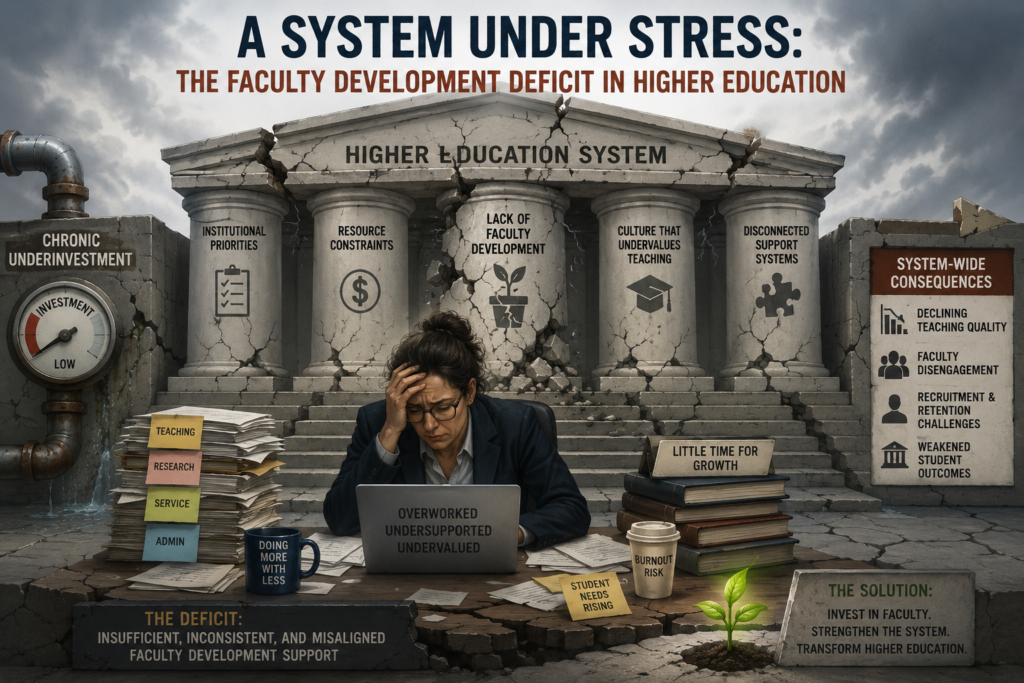
A System Under Stress: The Faculty Development Deficit in Higher Education
Higher Education in India has grown Rapidly over the last two decades. Enrolments are soaring, institutions Expanding and new disciplines Growing. But teacher training at the college and university level has not grown up.
Most faculty have Career-focused on subject expertise—research, publications, command on the subject. There has been little or no formal training in how to teach, how to lead a department, or how to incorporate technology and Indian knowledge systems into their courses. As a result, students experience class very differently from Organization, region and discipline to another.
The problem is not the absence of talent. India produces a large number of qualified faculty. The gap is in structured, continuous professional development – the kind that not only shapes what teachers know, but how they teach, mentor and contribute to institutional growth.

The future of an institution depends on the quality of the teachers.
The impact of a faculty member goes well beyond the lecture hall. At the higher education level, teachers are guiding students through some of the most formative years of their lives – the late teenage and early adult years, when values, intellectual habits and professional identities are being formed. As Minister Pradhan said at the launch, they are as important to shaping the trajectory of a young person as family.
Individual student outcomes and institutional health are both affected by teacher quality. Colleges and universities that invest in faculty development tend to have better research outcomes, better governance and graduates who are more prepared for the workforce and civic life. As teachers grow, so do the institutions to which they belong.
And this chain has to hold if India is to be a developed nation in 2047 – and a truly scientific, innovative society. The success of Chandrayaan was because of the educational institutions that inspired and trained the scientists behind it, said Pradhan. That inspiration starts in the classroom, with teachers who do more than just teach syllabi.
NEP 2020 envisions a holistic higher education: it calls for a curriculum that integrates Indian knowledge traditions, focuses on learning outcomes, develops ethical reasoning and prepares students to lead institutions and communities. That vision needs faculty who are constantly learning and adapting themselves.
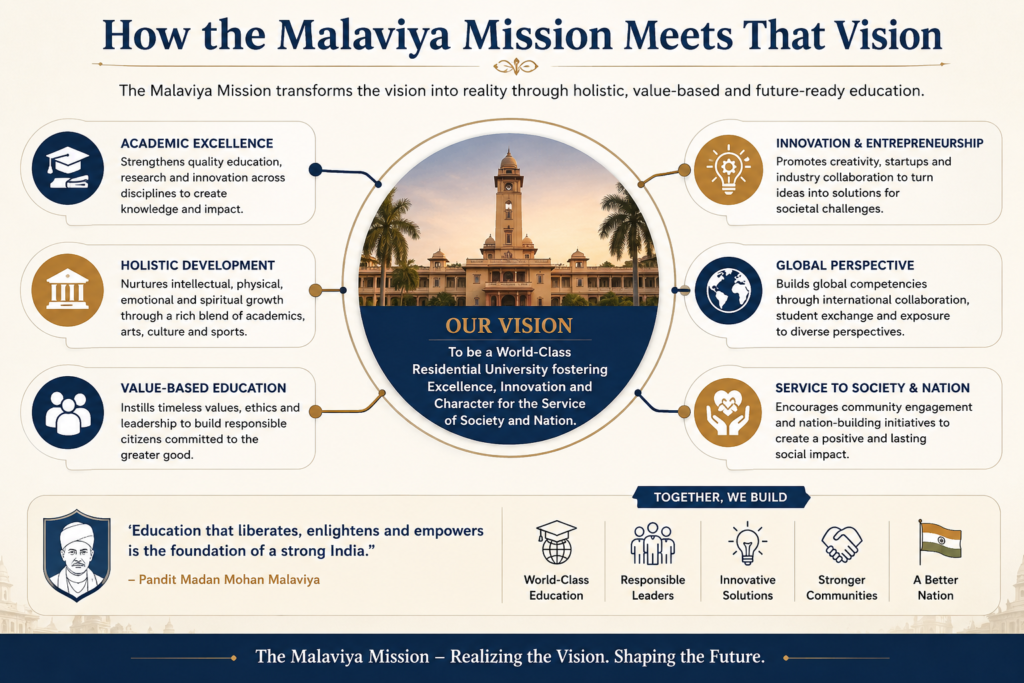
How the Malaviya Mission Meets That Vision
The Malaviya Mission Teacher Training Programme meets the faculty development gap directly, at scale and with a clear institutional architecture.
Malaviya Mission Teacher Training Centres (MMTTCs) have been established in 111 institutions in India. These centres will be central to the delivery of the programme, and will provide a distributed network that will reach faculty in all parts of the country.
The programme’s training themes are broad and are deliberately aligned with the priorities of NEP 2020:
Indian Knowledge Systems and Holistic Education
Academic and Governance Leadership
Research and development skills
Technology Integration & Inclusion
Identification and assessment of learning outcomes
This is not a certification workshop one time. The programme is structured as a continuous capacity building initiative and offers training in both online and offline modes, catering to the geographic and professional diversity of India’s teaching workforce. “It is expected that the coverage of all 15 lakh teachers in higher education will be achieved in two to three years.
We have developed a specific portal for faculty registration. Teachers can access programmes, track their progress and earn credentials. The Ministry has also committed significant funding to the initiative with the understanding that this is a first phase investment
The programme also acknowledges the institutional dimension of faculty work. It is not designed as a standalone programme for the development of individual teachers; it is explicitly concerned with the faculty member’s role in institutional development and links individual growth to larger organisational outcomes.

A Mission Inspired by a Vision
The name of the programme is purposeful. Madan Mohan Malaviya, founder of Banaras Hindu University and one of the architects of modern Indian education, said a free India would remain free only if it built strong educational institutions. His conviction was that learning had to be the foundation of social transformation and national independence.
The renaming of the so-called Human Resource Development Centres as Malaviya Mission Teacher Training Centres is a change in philosophy – from administrative training units to mission-based centres that fit into a larger national purpose.
As the government has articulated it, that purpose is to make India a leading knowledge economy: innovative, research-oriented, ethically grounded, and confident in its own intellectual traditions while open to the world.
What’s Next
This launch represents the start of a structured rollout. The programme is well placed to deliver from announcement to implementation rapidly, with 111 centres set up and the faculty portal operational. Participating institutions will convene training cohorts ; courses will be offered across the full range of themes to reach faculty at various stages in their careers.
The message to teachers in higher education is simple: professional development is no longer an afterthought. It is now a formal, funded and nationally coordinated commitment. It provides an opportunity for institutions to improve the quality of teaching and governance and to play a part in an education system that is relevant for the 21st century.